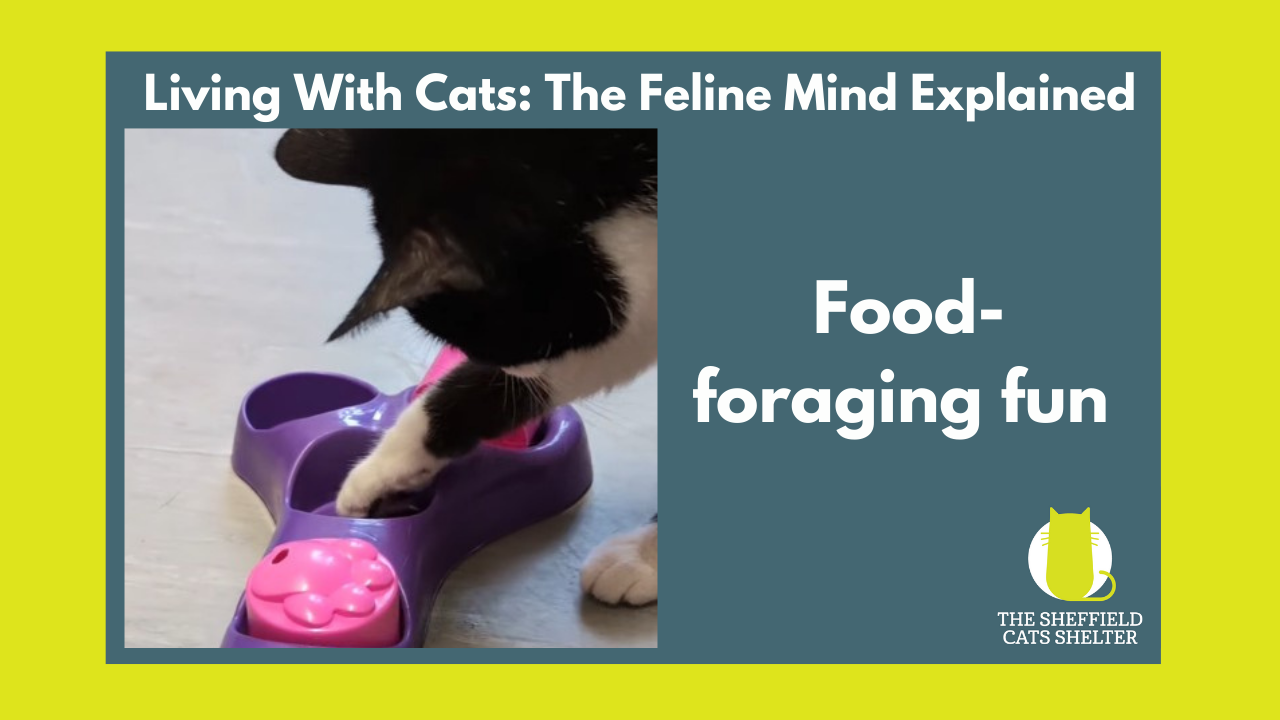
Foraging for meals through toys and puzzles isn’t just a fun way to feed your cat; it taps into their natural hunting instincts. In the wild, cats work for their food, using their brains and bodies to stalk, pounce, and catch prey. While our domestic friends enjoy the comfort of a full bowl, they still crave that challenge and stimulation.
Puzzle feeding gives them a safe, healthy outlet for that instinct. It keeps them active, sharp, and content, helping to prevent boredom, stress, and related behaviour issues like overgrooming or overeating.
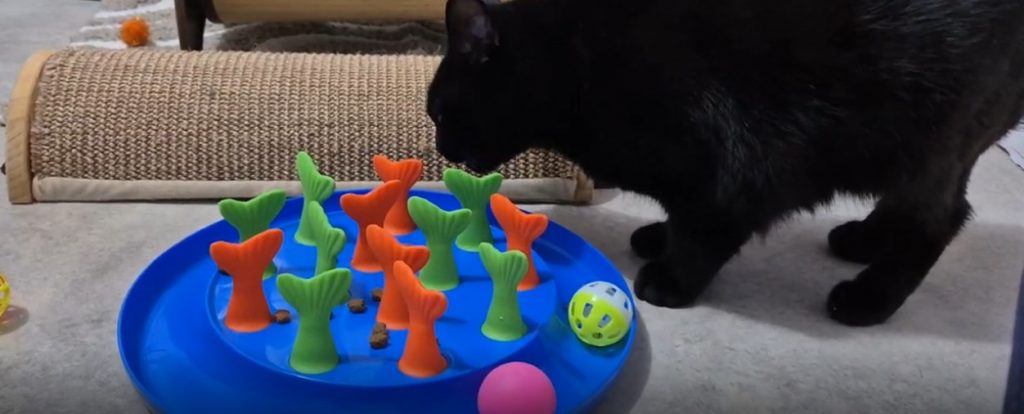
🐾 Beginner puzzles: easy wins build confidence
If you’re introducing your cat to puzzle feeding for the first time, start simple. Cats need to understand that puzzles mean “fun and food”, not frustration.
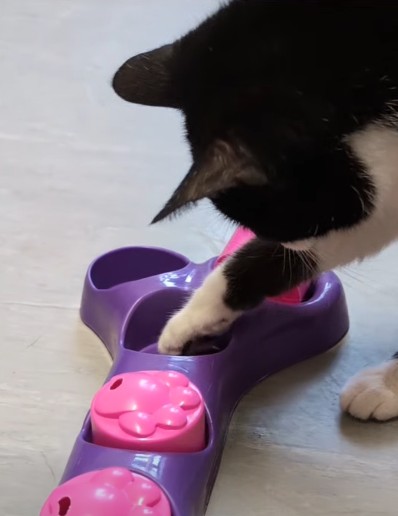
- Try offering a puzzle when your cat is a little hungry; motivation helps!
- Half-fill the puzzle with food, and scatter a few extra pieces around it as clues.
- If your puzzle has adjustable openings, keep them wide at first so the food is easy to access.
Once your cat gets the hang of it, you can increase the challenge by tightening openings or using trickier puzzles.
🍽 Wet or dry food? Both can work!
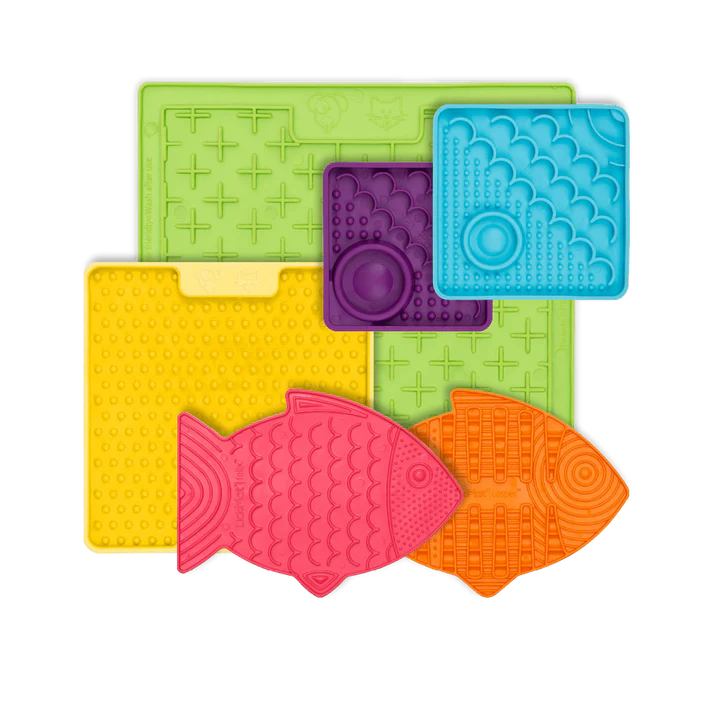
Different textures encourage different behaviours and movements:
Wet food: Silicone lick mats or plastic food mazes work brilliantly. They encourage licking and chewing, mimicking the natural tongue and jaw actions used when eating prey.
Dry food: Perfect for puzzle balls, rotating activity stations, snuffle mats, and refillable “mice.” These make cats bat, chase, and sniff out their meals, great mental and physical exercise!
♻️ DIY food fun: enrich their play the sustainable way
You don’t need to spend much (or anything!) to give your cat an enriching mealtime. Everyday household items can be turned into clever feeding games.
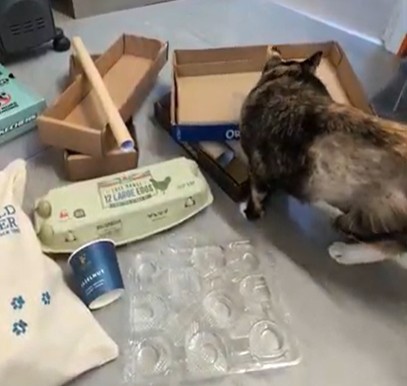
Try:
- Cutting holes in empty plastic bottles to make rolling treat dispensers.
- Hiding kibble inside toilet roll tubes or egg boxes for mini treasure hunts.
- Using yoghurt pots or cardboard boxes to create a “snack search” zone.
Just make sure anything you use is clean, safe, and free of sharp edges.
❤️ Health benefits: more than just fun
Foraging and puzzle feeding are fantastic ways to keep cats healthy, both physically and mentally. Working for their food rewards problem-solving, persistence, and physical movement, just like hunting.
Benefits include:
- Preventing boredom and stress-related behaviours.
- Providing gentle exercise and weight management.
- Slowing down fast eaters, reducing vomiting and the risk of obesity.
- Strengthening the bond between you and your cat through interactive play.
🧓 Old cats, new tricks
Cats of all ages and abilities can enjoy food puzzles. For older cats, it’s a wonderful way to keep their minds active and give them a sense of achievement, but it’s important to go at their pace.
If your cat has arthritis, dental pain, or any health condition that might make repetitive actions uncomfortable, speak to your vet first. Likewise, cats with illnesses that affect appetite or smell (like flu or nasal cancers) may find puzzle feeding difficult or discouraging.
The key is fun, not frustration; every cat can enjoy foraging with the right setup and support.
🌟 A final thought
Food-foraging toys and puzzles are more than entertainment; they’re an easy, rewarding way to boost your cat’s wellbeing every single day. Whether it’s a fancy puzzle feeder or a homemade cardboard creation, your cat will thank you for turning mealtime into an adventure!